Generated page
The five thematic domains and the student projects behind them. Rebuilt automatically from the properties of all notes — edit the notes, not this page.
Five thematic domains the Rethinking.Logistics studio worked in, synthesised from its student projects and the expert lectures. Each domain page links its projects, metrics, trade-offs, evidence gaps and expert insights; every number traces to a linked note.
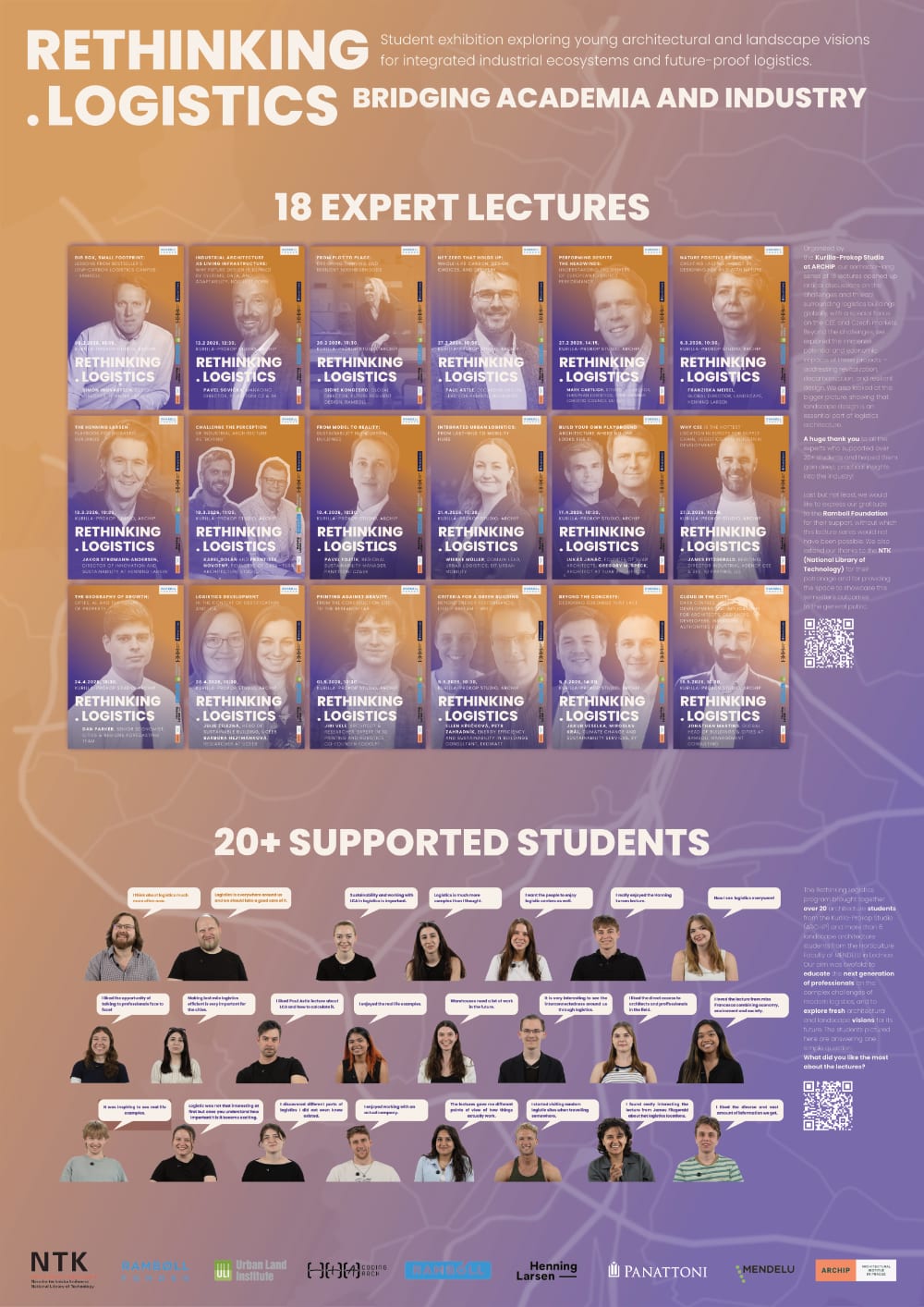
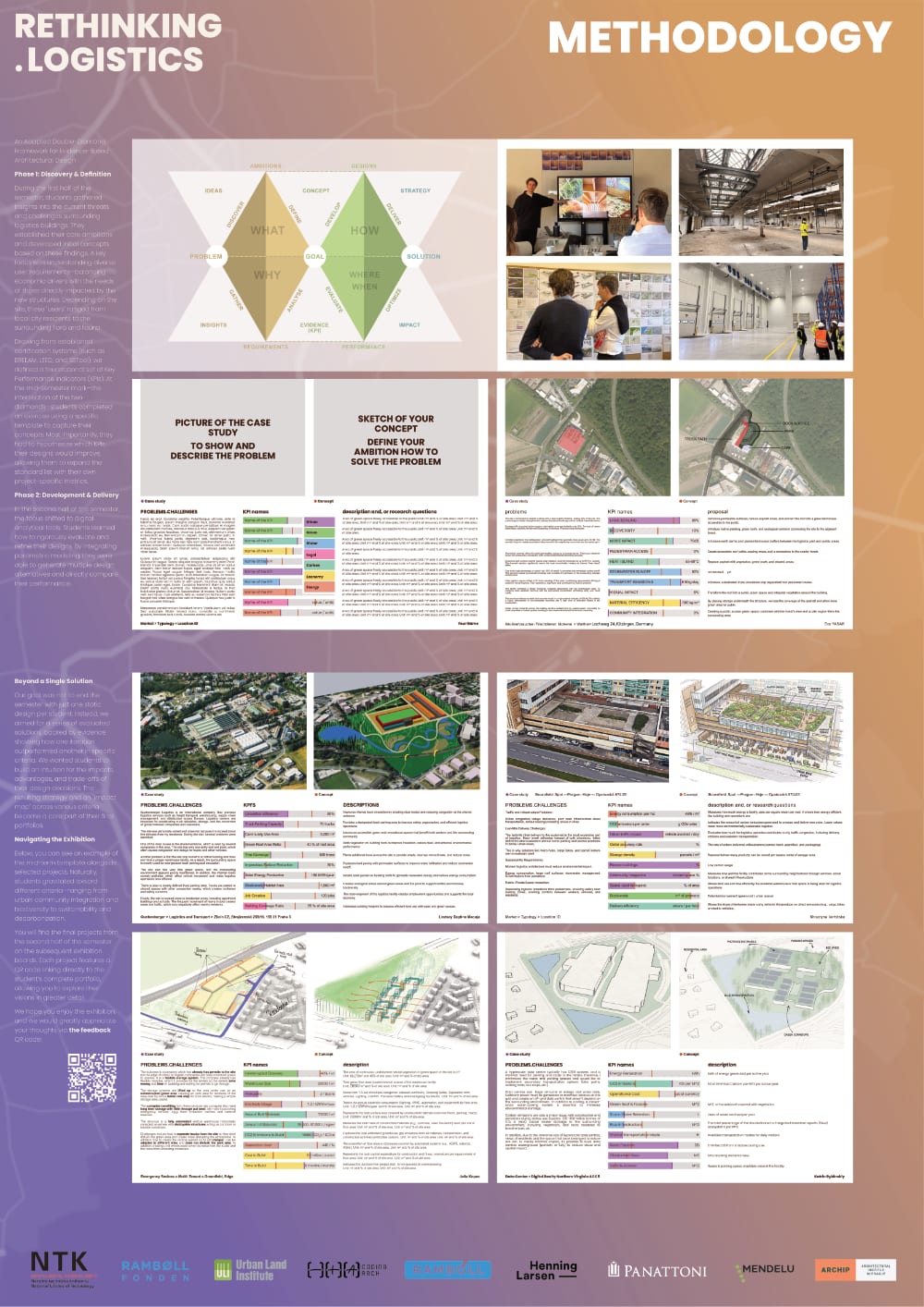
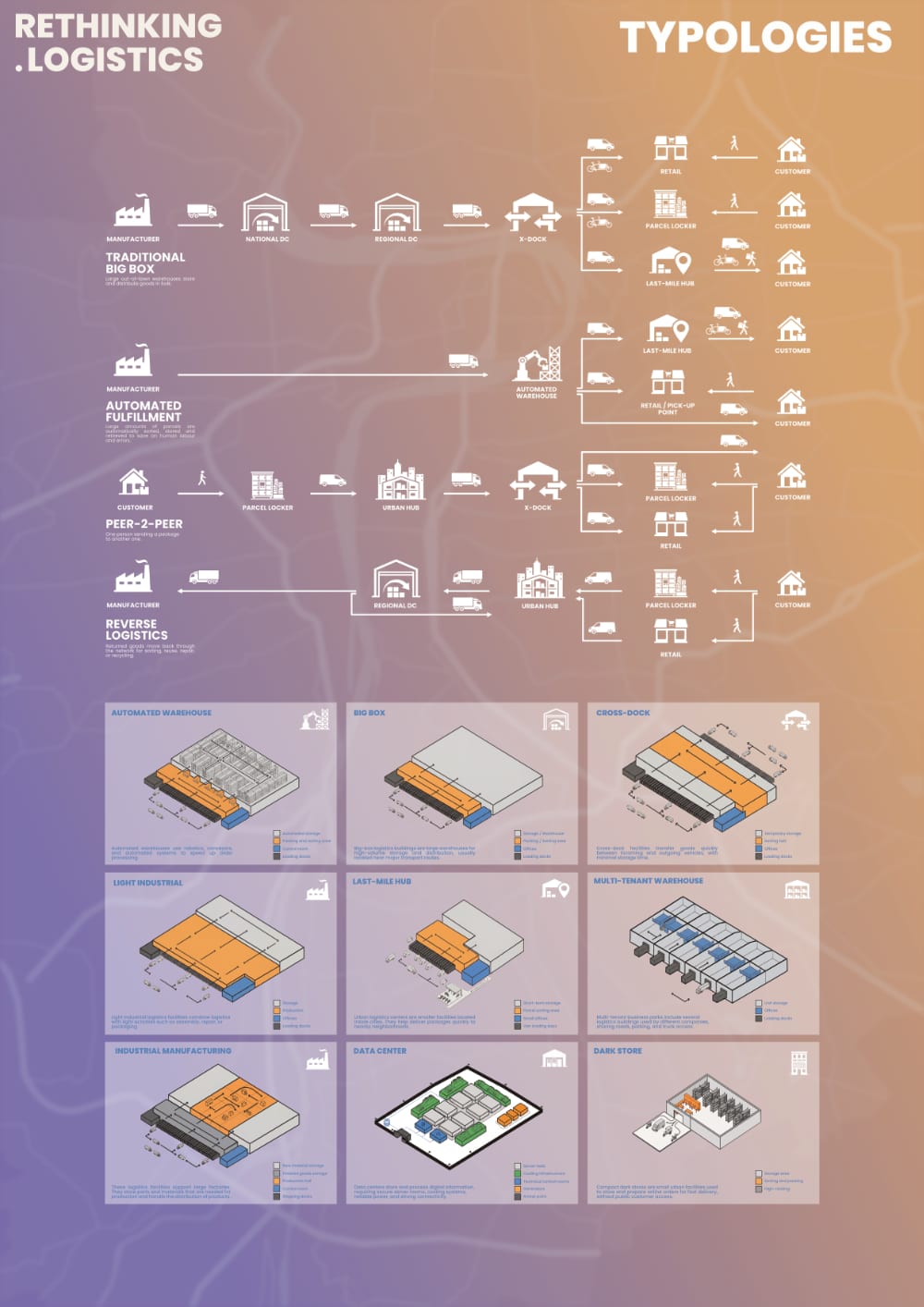
The five domains
| # | Domain | In short | Projects |
|---|---|---|---|
| 1 | Regenerative Peripheral Park | A logistics site on the urban edge is designed as landscape infrastructure: it restores habitat, connectivity and water on the land it occupies and gives part of it back to its neighbours. | Ece Yasar, Adam Večeřa, Natalie Žižková, Lindsay Daphne Macuja, Marek Nový, Aycha Chambashala, Adéla Berkovitz |
| 2 | Adaptive and Modular Logistics | A logistics building is designed for change rather than for one tenant and one moment: it can shrink, grow, move, be taken apart and be used for something else, so its structure outlives the lease it was built for. | Elsa Hauksdottir, Amy Naprstek, Julia Kopác, Sara Sulollari |
| 3 | Urban Hybrid | A logistics building is combined or stacked with other uses — public space, retail, production, community — and woven into the city fabric, often by reusing a building that already stands. | Sara Gani, Thomas Olsen, Vladi Kostecki, Ilinca Maria Baciu |
| 4 | Micro-Hubs and Urban Mobility | Urban freight is redesigned as a network of small hubs, clean vehicles and efficient yards, so that goods reach the city with fewer trucks, less paved land and a building its neighbours can use. | Eva Kažukolovaitė, Khrystyna Verbitska, Roshni Basu, Johannes Berger, Hynek Hrabík |
| 5 | Energy Symbiosis | A data centre is designed as an energy actor in its neighbourhood: its waste heat warms homes, greenhouses and public buildings, its roof produces power, and its siting follows the heat network and the grid rather than cheap land. | Katrin Rybinskiy, Julia Godard Lombard, Robin Jesenský |